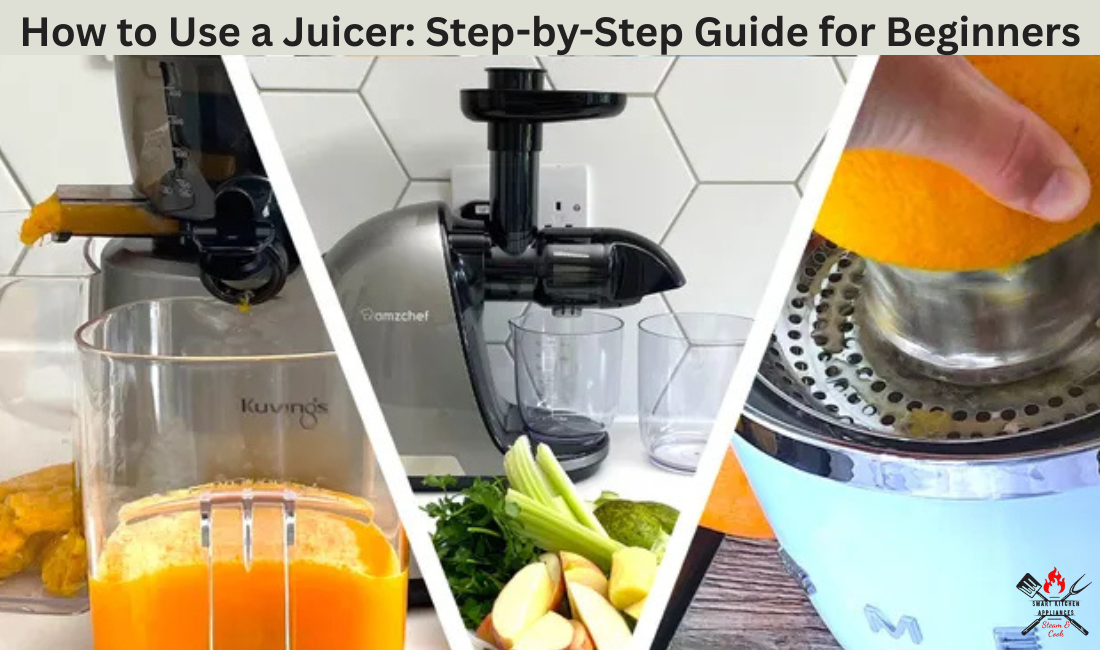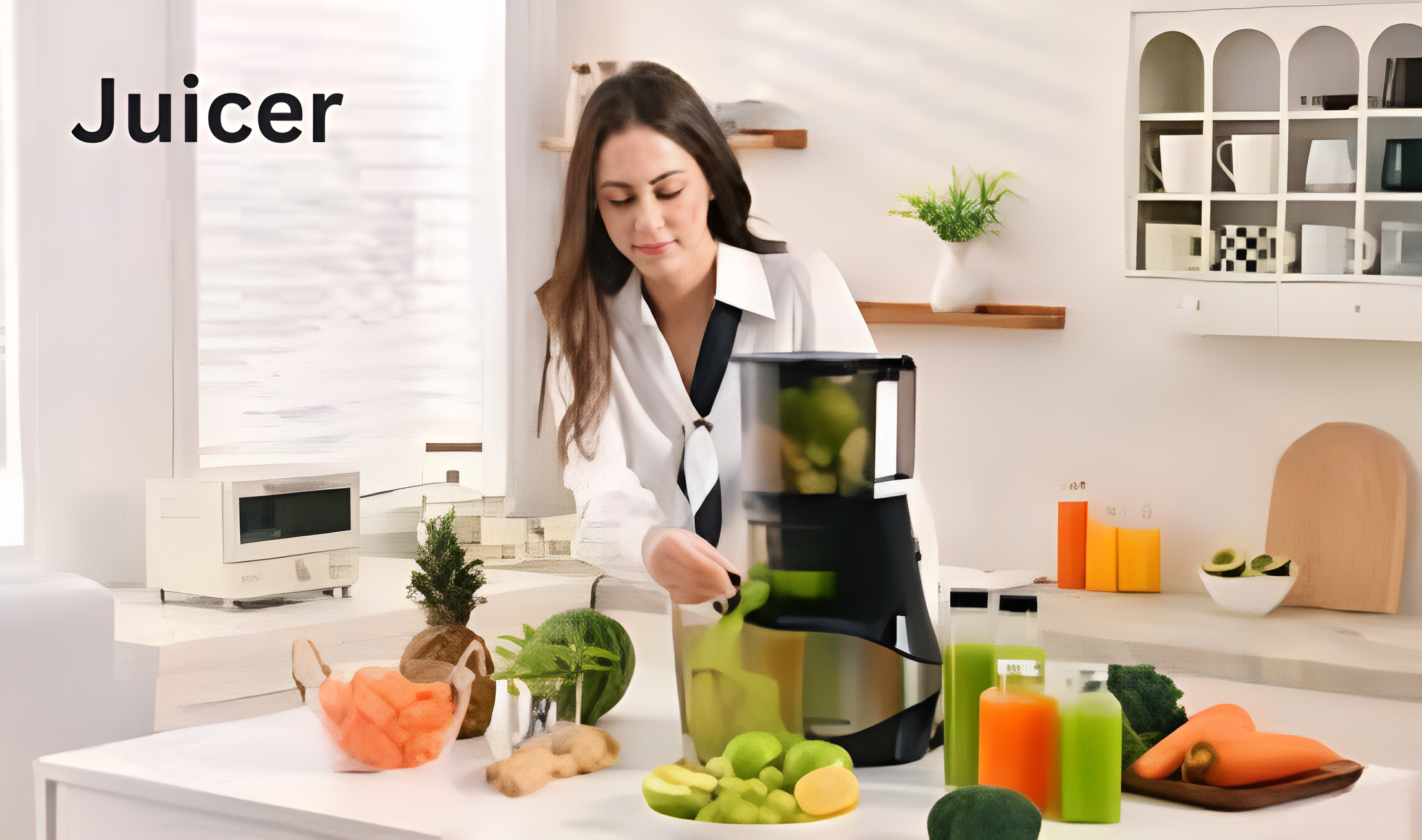
Are you wondering for what is a Juicer? Juicer is a household machine that extracts juice from vegetables and fruits. A juicer or juice extractor is what one uses to crush easily and get juice out of the pulp, thus making it simple to drink healthy drinks. This is a guide on types, advantages, disadvantages, and buying hints, hence you are able to make an informed choice.
Juice appliances are health-focused appliances in health-conscious kitchens that allow one to easily boost nutrient intake while trying new combinations. in this detail guide you can easily know about all the details about what is a juicer?
What’s The Difference Between a Blender and a Juicer? What to Know Before You Buy!
Types of Juicers and How They Work
1: Centrifugal Juicers
Centrifugal juicer employs high-speed rotating blades for chopping fruits. It will be best to employ such a juice maker on tough fruits and vegetables like carrots or apples.
Advantages: quick extraction, cheap, easy access.
Disadvantages: noisy, generates heat, tends to strip the nutrient content.
2: Masticating (Cold Press) Juicers
Juicer also referred to as cold press or masticating runs at slow speed, chopping veggies and fruits and pressing out juice. This machine of juice is ideal for pulling organic leafy greens and produces healthier liquid.
Benefits: more juice content, better nutrient retention.
Drawbacks: slower, more expensive.
3: Triturating (Twin Gear) Juicers
Twin-gear juicer crushes and presses veggies and fruits using two synchronized gears. This juice extractor provides the highest content and quality of juice—perfect for serious hobbyists.
Advantages: high quality juice, versatile food processing.
Disadvantages: costly, difficult to clean, cumbersome.
4: Citrus Juicers
Citrus fruit juicer is easy to use—manual or electric.
Advantages: easy, quick, inexpensive.
Disadvantages: for citrus fruits only.
How to Tell a Juicer Apart from a Centrifugal Juicer
A juicer is a general term. A centrifugal juicer is a particular model under that term.
In simple words:
- Juicer = general device that extracts juice
- Centrifugal juicer = high-speed type with blades
A comparison table points out differences in speed, quality of juice, noise, and cost to make your choice.

Advantages of Keeping a Juicer at Home
Having a juicer in the house has several advantages:
- Greater consumption of water and nutrients
- Healthy lifestyle choice support
- Blends tailored to your preferences
- Less expensive than purchasing juice at the store
- Drinking fresh juice versus processed beverages enhances wellness
Strengths and Weaknesses of Juicers
Overall Strengths
A juicer provides instant and convenient access to fresh nutrients
- Brings diversity into your eating routine
- Saves preparation time on hectic days
- Allows you to manage ingredients and sugar content
Overall Weaknesses
Juicer operation strips fiber from fruits and vegetables
- Upfront cost of device may be high
- Cleaning and maintenance differ by model
- Machines can be loud or large
What to Consider in a Juicer’s Key Features
When purchasing a juicer, look for:
- Motor power (powerful motor enhances extraction)
- Juice yield and efficiency (what amount of juice per pound of produce)
- Assembly and clean-up ease
- Noise level
- Size and footprint on the countertop
- Materials used in building (BPA‑free plastic, stainless steel parts)
Tips on How to Buy the Right Juicer
To select the proper juicer:
Align the juicer type to your usage (daily smoothies vs occasional citrus)
Think about produce you’ll juice most (greens vs. hard fruits)
Set a budget and check warranty coverage
Read reviews for real‑world cleaning ease and reliability
Opt for BPA‑free components and safety features
Juicer Maintenance and Cleaning Tips
To prolong your juicer’s lifespan:
- Rinse and clean right after juicing
- Use brushes provided or recommended
- Perform monthly deep cleaning (e.g. soak parts in vinegar water)
- Store in a cool, dry location to prevent mold or corrosion
Juicer FAQs
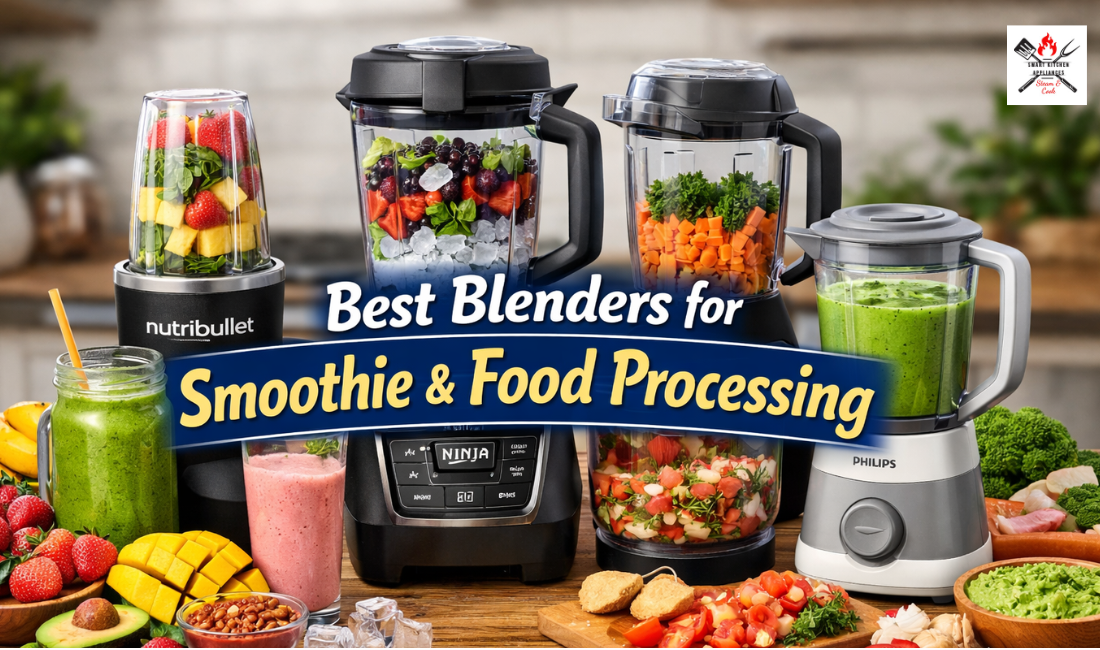
Can a juicer substitute for a blender?
No; a juicer removes juice only, while a blender leaves fiber intact.
Do juicers destroy fiber?
Yes—juicing isolates pulp from juice, thus eliminating fiber.
Is cold-pressed juice better?
Cold-press juicers tend to retain more nutrients and flavor.
Conclusion: What is a juicer?
At the end you will get all the knowledge about what is a juicer? As you know, juicer choice depends on your eating lifestyle, wallet, and cleaning and assembly maintenance. Of the options of centrifugal, cold‑press, twin‑gear, and citrus juicers, each one suits different needs. Whether your need is for speed, nutritional retention, or quiet, there’s an appropriate juicer for you. Now that you know this, you can make a wise choice and start sipping fresh homemade juice. A well-chosen juicer starts your journey to health—one glass at a time.
References:
Associations of Soluble Fiber, Whole Fruits/Vegetables, and Juice with Plasma Beta-carotene Concentrations in a Free-living Population of Breast Cancer Survivors, San Diego State University/University of California, San Diego…Read More