Why learn juicing the correct way? Juicing is a quick way to consume your fruits and vegetables and add more vitamins to your day. But as a beginner, you may ask yourself: Which button do I push? Do I peel the fruit? How do I wash the juicer? This guide lays it all out with simple steps, beginner advice, and pitfalls to avoid—so your first glass of homemade juice tastes wonderful and cleanup is easy. Here, smartkitchenappliances provides you a complete guide to beginners about how to use a juicer?
How To Use A Juicer (Step-By-Step Tutorial)
Learn About Your Juicer (Model & Parts)
Different types of juicers (choose your match)

1: Centrifugal juicer (speedy juicer):
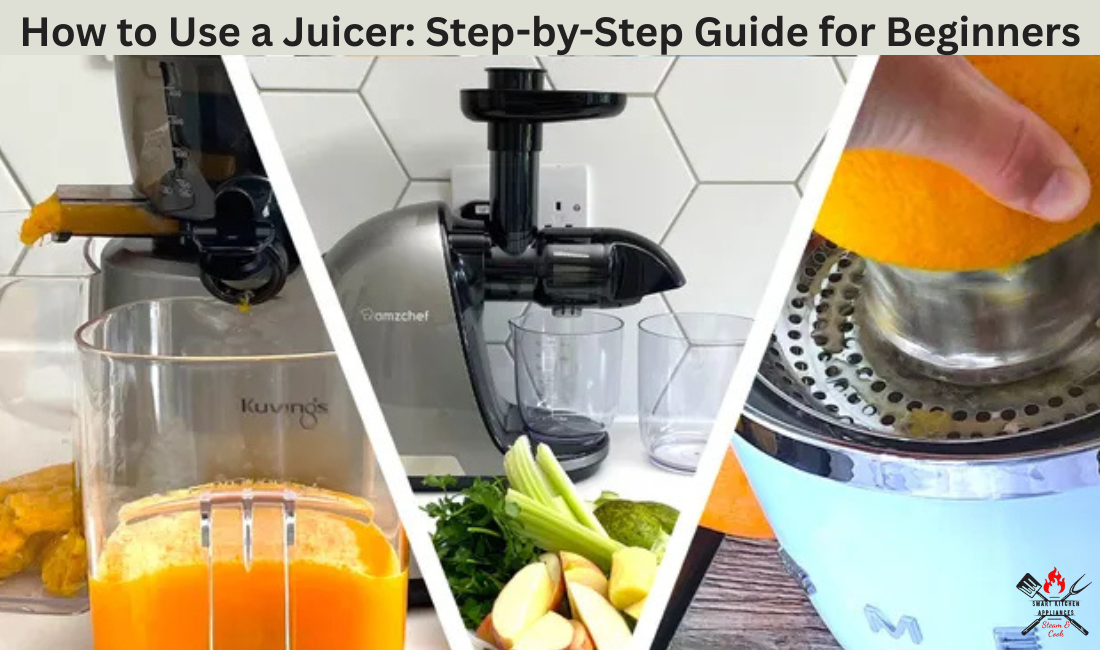
Has a whirring blade and mesh filter. It’s fast and suitable for firm produce such as apples, carrots, and beets. Generally less expensive, sometimes louder, and produces more foam.
2: Masticating juicer (slow / cold press):
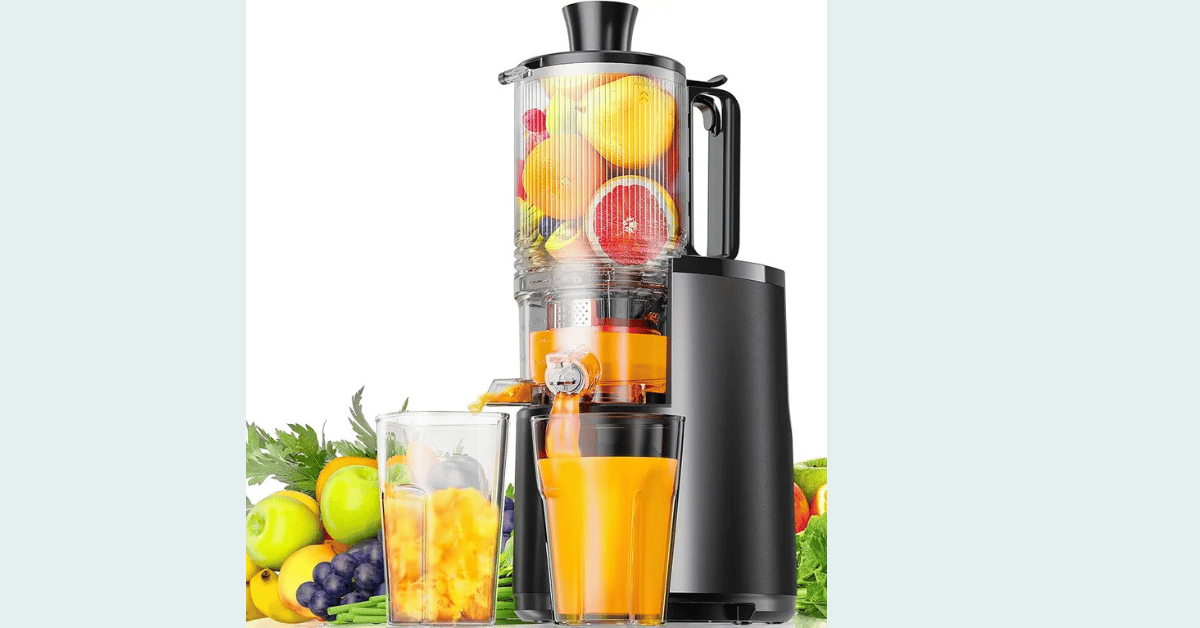
Utilizes an auger (screw) to crush and press juice at low RPM. Quieter, typically higher juice yield, and excellent for leafy greens. Slower and typically more expensive.
(Tip: Both can produce awesome juice—select based on speed, price, and what you juice most.)
Parts you’ll use almost or nearly every time
- Feeding chute + pusher/plunger
- Filter screen/mesh (keeps pulp out)
- Juice spout + jug
- Pulp container
- Motor base
Recognizing or knowing about these parts’ names assists you in following steps and your guide.
What you’ll need before you begin
- Fresh produce (see below Beginner starter list)
- Cutting board & knife
- Clean juicer with all parts available
- Large glass or pitcher
- Optional: lemon, ginger, mint (for flavor boosts)
Beginner starter list (easy fruits & vegetables)
- Apples, oranges, carrots, cucumbers (easy, sweet, high juice)
- Spinach, kale, celery (excellent for greens)
- Pineapple, watermelon (juicy and refreshing)
- Skip banana and avocado in a juicer (they’re smoothie stuff).
Step-by-step: how to operate a juicer
Follow the step-by-step guide given below, which help you how to operate the juicer?

1) Prep and wash your produce
- Wash all under running water to flush away dirt and wax.
- Peel thick peels (orange, pineapple) and pit out (peach, mango).
- Cut big things into pieces that will feed your chute.
- For leafy greens, roll them up tight so they feed evenly.
2) Put your juicer together
- Secure the filter screen.
- Secure the pulp cup and juice pitcher.
- Ensure everything clicks or locks (most machines will not turn on if they are not secure).
3) Select the correct speed (if your juicer has a variable speed)
- Low speed: soft fruits and leafy greens.
- High speed: hard fruits such as carrot, beet, apple.
4) Feed ingredients slowly
- Switch on the juicer.
- Feed a few pieces at a time and press gently with the plunger.
- Alternate soft + hard items to maintain the flow constant.
- Don’t force feed or over-stuff the chute—this safeguards the motor and enhances extraction.
5) Observe the juice & the pulp
- Juice shoots out the spout; pulp falls into the bin.
- If pulp is extremely wet, re-run through to maximize juice yield.
- Some foam is usual (more prevalent with centrifugal models).
6) Off, take apart, and clean immediately
- First unplug.
- Remove items in this order: lid → filter screen → pulp container.
- Rinse now—dried pulp is hard to scrub later. (See full cleaning instructions below.)
Beginner juicing tips that make a big difference
Start simple: Use 2–3 ingredients per juice so flavors are clean.
Balance sweet + green: Apple or pineapple can sweeten spinach, kale, or celery.
Add acidity: A squeeze of lemon or lime brightens flavor and slows oxidation.
Prep once, juice twice: Wash and chop extra; store in the fridge for tomorrow.
Quiet mornings: Slow juicers are generally quieter if you share a space.
Quick recipes (beginner‑friendly)
1) Classic Carrot‑Apple‑Ginger
- 2 carrots, 1 apple, 1 small knob ginger, ½ lemon
- Sweet, zesty, good for mornings.
2) Simple Green Starter
- 1 green apple, 1 cup spinach, 1 cucumber, ½ lime
- Light, fresh, beginner‑friendly greens.
3) Citrus Refresher
- 2 oranges (peeled), 1 small ginger, few mint leaves
- Bright and refreshing; ideal post-exercise.
(These concise recipes fit into “juice recipes for beginners,” “green juice recipe,” and “lemon ginger juice” style searches.)
How to cleanup a juicer (quick routine)
Immediately after juicing (2–5 minutes)
- Dispose pulp in trash or compost.
- Rinse the jug, lid, and pulp container with warm water.
- Clean the filter screen using the small brush (most important step).
- Mild soap and warm water drop removes sticky sugars.
- Rinse and air‑dry on a rack (or towel‑dry if storing immediately).
- Dishwasher parts, top‑rack safest (consult your manual).
Deep clean (weekly)
Soak filter screen 10–15 minutes in warm water with a dash of vinegar or baking soda, then brush and rinse thoroughly.
Storage & safety
How to store fresh juice?
- Fill a capped bottle to the top (less air = less oxidation).
- Store in the fridge and consume within 24–48 hours for optimal flavor.
- Shake before use (natural settling occurs).
Safety & good habits practices
- Unplug prior to assembling or cleaning.
- Don’t jab at food with fingers—use the plunger.
- Cut around hard pits and don’t use ice or rock-hard frozen fruit.
Troubleshooting (quick solutions)
1: Juicer clogs or jams/stalls: Slow down, chop pieces finer, alternate hard/soft items, and remove peels or strings around the auger/blade.
2: Excessive foam: Squeeze in some lemon; try a lower speed or a slow juicer.
3: Weak watery juice: Use more ripened fruit, include carrot or apple for thickening, or decrease watery foods like cucumber.
4: Pulp spillage or leaking: Ensure the filter screen and seals are properly locked in place.
Centrifugal vs. Slow (masticating) juicer—what do beginners want?
- Pick centrifugal if you desire speed, less initial expense, and primarily juice hard fruit and carrots.
- Pick masticating/slow if you prefer quieter juicing, smoother handling of greens, and generally more yield from the same input. Reviews and testing publications frequently present the decision this way and contrast models based on yield, ease of use, noise, and cleanup.
Note on nutrients: You’ll find claims that cold press retains more vitamins than centrifugal. Some lab tests question how large that margin actually is, so choose based on attributes you value (yield, speed, noise, cleaning) as opposed to nutrition claims alone.
FAQs
Do I need to peel fruits?
Peel thick or bitter peels (orange, pineapple); thin peels (apple, cucumber) are fine after washing.
Can I juice leafy greens?
Yes, slow juicers particularly excel with spinach, kale, and wheatgrass; with centrifugal, roll greens up tightly and feed slowly.
Tom’s Guide
How long does juice last?
Best within 24–48 hours in a sealed bottle in the fridge.
What’s the best juicer for beginners?
One that suits your requirements: centrifugal for speed/budget; masticating for quiet and greens. Look at wide feed chute, dishwasher‑safe components, warranty, and reviews.
Final Thoughts:
Operating a juicer doesn’t have to be intimidating. Learn your machine, prep your ingredients, and adopt a basic step-by-step practice, and fresh juice is fast, fun, and rewarding.
Whatever you prefer between fast centrifugal and slow masticating juicer for convenience or increased juice yield and leafy greens, what matters is to begin with small quantities, remain consistent, and develop juicing as a habit.
As you go along, you’ll find your favorite flavor pairings, get tips on how to wring the most juice possible, and have a cleanup process that takes mere minutes. Juicing is more than a chore in the kitchen—it can be part of a healthier, more vibrant life.
So go ahead, get your favorite fruits and vegetables, turn on your juicer, and grab a glass of freshly made homemade juice. Your body (and taste buds) will appreciate it!